
A look inside
Five screens, and what you actually do on them.
Bellows & Barley is a city building game without a map. You do not place houses on tiles; you decide where your people work, what gets made from what, and when to buy rather than wait. The screens below are the ones you will spend your time on.
Where do you begin?
Production does not open with a list of 105 workshops but with the question of what you are working on. Every tile is a good, and under it stands how long the road to it is – “Stone · 8 workshops”. If anything in that chain is stuck, the tile says so before you go in.
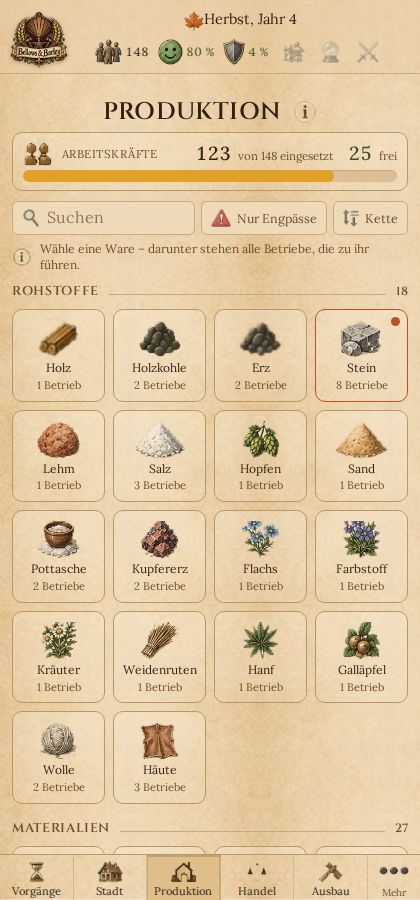
And then only what belongs to it
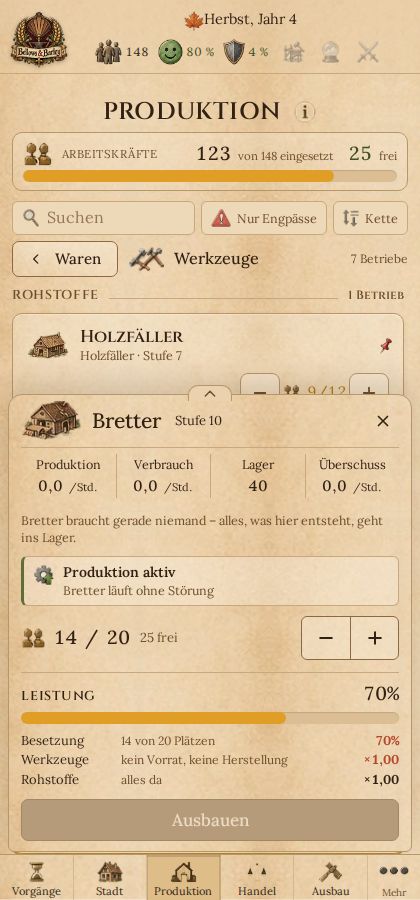
One tap on tools, and the seven workshops that lead there are all that remain – ordered by stage, raw material at the bottom, product on top. You move workers right on the card, and the numbers below change at once, not at the next tick.
Building bigger, when it pays
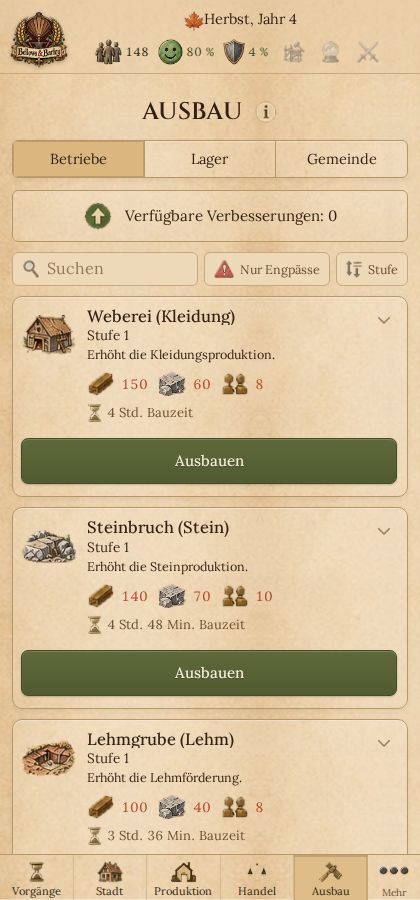
Every workshop can be upgraded: more jobs, more output, higher cost. A building site gathers its materials from the store bit by bit, so you need not wait until everything is in. Whatever is missing is written on the card.
Buying what would take too long
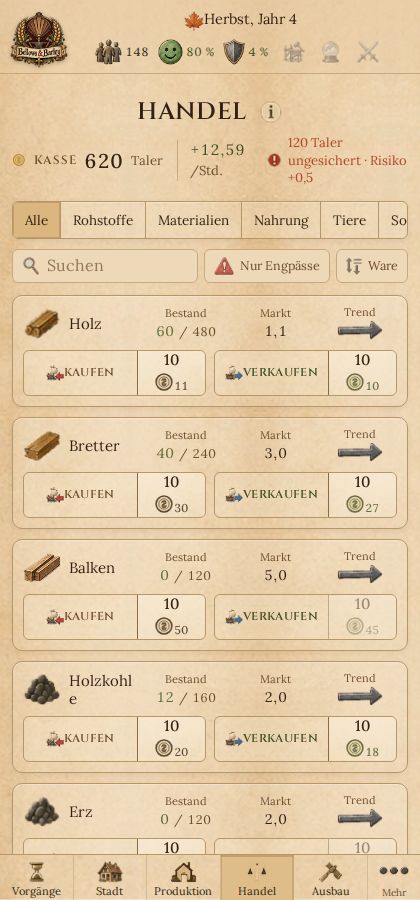
The market takes what you have spare and delivers what you lack, at prices that move. If a build should not wait, you simply buy the missing planks. Your treasury fills with taxes and drains through upkeep.
What it really hangs on
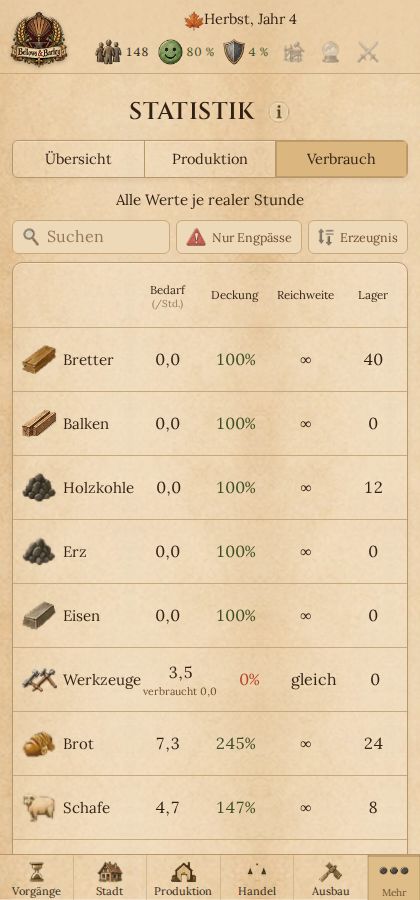
Statistics put numbers to what the colours on the cards hint at: how much of a good is needed, how much of that is covered, and how long the store will last. “Green from 30 an hour” – that is the measure behind every decision.
Try it
The game is free, needs no account and starts in your browser – on a desktop or on your phone. Start playing, or read the questions and answers first.